How I Reinvented My Health Through Simple Daily Rehab Moves
What if the key to preventing chronic illness wasn’t in a pill, but in how you move every day? After a minor injury turned into long-term stiffness, I dove into rehabilitation methods not just to recover, but to build resilience. What started as physical therapy became a lifestyle—blending movement, mindset, and consistency. This isn’t about dramatic fixes, but sustainable shifts. I’ll share what actually worked, why it matters for disease prevention, and how small rehab habits can quietly transform your long-term health.
The Wake-Up Call: When Recovery Became Prevention
It began with something small—a slight strain in the lower back after lifting a heavy box. At first, it seemed insignificant, the kind of ache most people brush off with a stretch and a deep breath. But over weeks, the discomfort didn’t fade. It settled in, becoming a dull, persistent presence that made bending, standing, and even sleeping a challenge. Simple tasks like tying shoes or reaching for a high shelf became cautious maneuvers. The realization hit slowly: this wasn’t just a strain. It was a warning. The body had been sending signals, and they’d gone unheeded for too long.
That moment marked a turning point. I sought help from a physical therapist, not expecting it to change my entire outlook on health. The sessions began with basic assessments—posture checks, range-of-motion tests, and gait analysis. What emerged was not just a localized issue in the back, but a pattern of imbalances throughout the body. Years of sitting, minimal movement, and poor posture had weakened core muscles, tightened hips, and compromised spinal alignment. The injury wasn’t the cause; it was the consequence. My body had reached its limit.
What surprised me most was the therapist’s emphasis not just on healing, but on prevention. ‘Rehabilitation,’ she explained, ‘isn’t just for after something goes wrong. It’s a daily practice that keeps things from going wrong in the first place.’ This shifted my understanding completely. I had always thought of rehab as reactive—something you do when injured. But now, it became clear that rehab could be proactive, a form of long-term body maintenance. Just as brushing your teeth prevents cavities, consistent movement and body awareness can prevent chronic pain, joint degeneration, and even systemic conditions.
Early intervention, I learned, is critical. Delaying care or ignoring minor discomfort can lead to compensatory patterns—ways the body adjusts to avoid pain that eventually create new problems. A stiff hip might lead to altered walking mechanics, which stresses the knees and lower back over time. These small compensations accumulate, increasing the risk of more serious conditions like osteoarthritis or chronic back pain. By addressing issues early, even before they become painful, we can maintain function and reduce the likelihood of long-term disability. This is where daily rehab habits come in—not as a response to crisis, but as a commitment to ongoing wellness.
Rehabilitation Redefined: More Than Just Healing
Rehabilitation is often misunderstood as a short-term fix for injuries. In reality, it is a comprehensive approach to restoring and maintaining physical function. It goes beyond pain relief to address the root causes of movement dysfunction—weakness, stiffness, poor coordination, and neural miscommunication. True rehabilitation rebuilds the body’s ability to move efficiently, safely, and with confidence. It’s not about pushing through pain or achieving peak performance; it’s about creating a foundation of stability, mobility, and resilience that supports everyday life.
Scientifically, consistent rehab practices have a profound impact on multiple body systems. For the musculoskeletal system, regular mobility work helps preserve joint cartilage, reduces stiffness, and enhances synovial fluid circulation—nature’s lubricant for joints. Strength training, even at low intensity, stimulates muscle protein synthesis, which slows age-related muscle loss and supports metabolic health. For the circulatory system, movement promotes blood flow, which delivers oxygen and nutrients to tissues while removing metabolic waste. This is especially important for deep tissues like ligaments and tendons, which have limited blood supply and heal slowly without adequate circulation.
The nervous system also benefits significantly. Rehab exercises that involve coordination, balance, and controlled movement improve neuromuscular communication—the dialogue between the brain and muscles. This enhances motor control, reduces the risk of falls, and supports overall functional independence, especially as we age. Additionally, mindful movement practices have been shown to regulate the autonomic nervous system, reducing the dominance of the stress-driven sympathetic response and promoting the rest-and-digest parasympathetic state. This shift lowers cortisol levels, improves sleep, and reduces systemic inflammation—a key driver of many chronic diseases.
Perhaps most importantly, rehabilitation is deeply linked to the prevention of chronic conditions. Studies have shown that individuals with better mobility and strength have a lower risk of developing type 2 diabetes, cardiovascular disease, and certain types of arthritis. Improved insulin sensitivity from regular muscle engagement helps regulate blood sugar. Stronger hearts and more elastic blood vessels result from consistent, moderate physical activity. Even cognitive decline has been associated with poor physical function, suggesting that movement is not just good for the body, but for the mind as well. In this way, rehabilitation becomes a form of disease prevention—a daily investment in long-term health.
My Daily Movement Blueprint: The Core Rehab Habits
Out of necessity, I developed a simple, sustainable routine centered around three foundational practices: mobility drills, low-impact strength training, and breathwork. These weren’t time-consuming or intense, but they were consistent. I committed to doing them every morning and evening, integrating them into my daily rhythm like brushing my teeth or making tea. The goal wasn’t to exhaust myself, but to awaken and soothe the body in balanced ways.
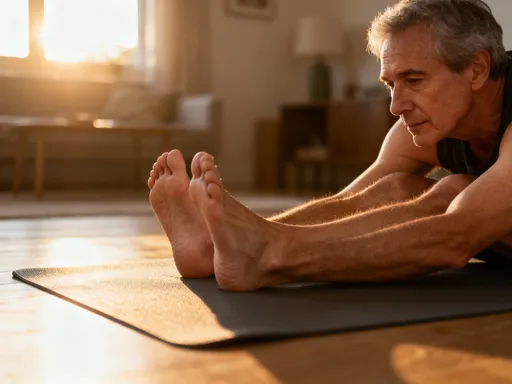
Mobility drills became my morning ritual. I started with floor-based flows—gentle movements that warmed up the spine, hips, and shoulders. One of my favorites was the cat-cow stretch, performed slowly with deep breaths to encourage spinal flexibility. I followed this with supine figure-four stretches to release tight glutes and hip rotators, and thoracic spine rotations to improve upper back mobility. These movements took no more than 15 minutes, but they made a noticeable difference in how I felt throughout the day. I noticed I could stand taller, move more freely, and sit without stiffness building up by mid-afternoon.
For strength, I relied on resistance bands and bodyweight exercises. These required minimal equipment and could be done at home. I focused on foundational movements: glute bridges to activate the posterior chain, wall push-ups to build upper body endurance, and seated rows with a band to strengthen the upper back and improve posture. I also incorporated mini-squats and heel raises to maintain leg strength and ankle stability. The key was consistency, not intensity. I aimed for two sets of 10–12 repetitions, focusing on form and control. Over time, I noticed improved balance, better endurance, and a greater sense of physical confidence.
Breathwork became my evening anchor. I practiced diaphragmatic breathing—lying on my back with one hand on the chest, the other on the belly, inhaling deeply through the nose to expand the abdomen, then exhaling slowly through the mouth. This simple practice, done for just five minutes, helped calm my nervous system and prepare my body for rest. It also improved my awareness of how I held tension—often in the shoulders and jaw—and gave me a tool to release it. Over time, this practice enhanced my sleep quality and reduced the background stress that had once felt constant.
What made this blueprint work was its sustainability. I didn’t need a gym, special clothing, or hours of free time. The habits fit into my life, not the other way around. I learned that small, regular inputs yield compounding benefits—much like saving money over time. And because the movements were gentle and pain-free, I never felt discouraged or overwhelmed. This consistency, more than any single exercise, was the real driver of change.
Mindset as Medicine: The Mental Side of Physical Recovery
Perhaps the most unexpected part of my journey was the mental shift that accompanied physical progress. At first, I approached rehab with impatience—wanting quick fixes, immediate results. I would compare my progress to others, feeling frustrated when improvements came slowly. But over time, I learned that healing is not linear. There were days when I felt worse, when stiffness returned or energy dipped. Instead of pushing harder, I began to listen—tuning into subtle signals from my body and adjusting accordingly.
This shift from striving to observing was transformative. I started using body scans—quiet moments where I mentally checked in with each part of my body, noticing tension, warmth, or ease. Combined with breathwork, this practice cultivated a deeper self-awareness. I began to recognize how stress showed up physically—tight shoulders, shallow breathing, clenched jaw—and how addressing it early could prevent flare-ups. This mind-body connection became a powerful tool, not just for recovery, but for prevention.
The danger of pushing too hard cannot be overstated. Many people, eager to regain function, overdo their exercises and end up setting themselves back. I learned this the hard way when I increased my resistance band workouts too quickly and triggered a flare of lower back discomfort. My therapist reminded me that rehabilitation is not about proving strength, but about rebuilding it wisely. Gentle persistence—showing up daily with care and attention—yields better long-term results than sporadic, intense efforts.
Mental resilience became just as important as physical strength. Accepting that healing takes time, that setbacks are part of the process, and that small steps matter—these realizations reduced anxiety and built confidence. I stopped measuring success by how much pain I could tolerate and started measuring it by how well I could function. This mindset shift made the journey sustainable. It also highlighted a crucial truth: stress is a silent driver of disease. Chronic stress elevates inflammation, weakens immunity, and disrupts hormonal balance. By managing stress through mindful movement and breath, I wasn’t just healing my back—I was protecting my entire system.
Environment Matters: Designing a Life That Supports Healing
No habit exists in isolation. The environment—our physical space, daily routines, and social habits—plays a powerful role in shaping behavior. I realized that if I wanted my rehab practices to stick, I needed to design a life that supported them. This meant making small but meaningful changes to my surroundings and routines.
I started with my workspace. I replaced my soft office chair with an ergonomic one that supported my spine and encouraged better posture. I set a timer to stand and stretch every 30 minutes, using those breaks to do a few neck rolls, shoulder shrugs, or standing marches in place. I also adopted walk-and-talk meetings when possible, turning phone calls into opportunities for movement. These micro-movements added up, preventing the stiffness that used to build up by midday.
Sleep and hydration also became priorities. I learned that tissue repair happens primarily during deep sleep, so I established a consistent bedtime routine—dimming lights, avoiding screens, and practicing breathing exercises. I also made sure to drink enough water throughout the day, as hydration supports joint lubrication and muscle function. Dehydration can mimic or worsen stiffness, so this simple change had an outsized impact.
I built cues into my environment to reinforce good habits. I kept my resistance band on the nightstand, so I’d see it each morning and evening. I placed a small yoga mat in the corner of the bedroom, making it easy to drop into a quick stretch. These visual reminders reduced the effort needed to start, turning intention into action. Over time, these micro-habits became automatic—part of the fabric of my day, not an added chore.
By aligning my environment with my goals, I removed friction and made healthy choices the default. This didn’t require drastic changes, just thoughtful adjustments. And the more these habits became routine, the more they supported my overall well-being—not just physically, but emotionally and mentally.
Progress Over Perfection: Tracking What Actually Changes
In a culture obsessed with metrics and appearance, I had to redefine what progress looked like. There were no dramatic weight losses or visible muscle gains. Instead, my victories were functional: I could bend down to pick up a dropped pen without hesitation. I could stand in the kitchen for 20 minutes preparing a meal without discomfort. I could walk up a flight of stairs without feeling winded. These were the real indicators of improvement—measures of freedom, not aesthetics.
I began using simple self-checks to track progress. Each week, I tested my range of motion—how far I could reach forward in a seated forward bend, how easily I could rotate my shoulders. I rated my energy levels and pain on a scale of 1 to 10, noting trends over time. I also paid attention to sleep quality and mood, recognizing that physical health deeply influences mental well-being. This data wasn’t about perfection; it was about awareness. It helped me see patterns—when I skipped breathwork, my sleep suffered; when I sat too long, my back tightened.
Focusing on function kept my motivation strong. When I felt discouraged, I reminded myself of how far I’d come—not in how I looked, but in how I lived. This shift in perspective made the journey more meaningful. It also protected me from the trap of comparison. I wasn’t trying to look like anyone else or meet an external standard. I was building a body that could do what I needed it to do, with ease and reliability.
Adjusting my routine based on feedback—not trends or ego—was key. If a movement caused discomfort, I modified it. If I felt fatigued, I reduced intensity. This responsiveness kept me safe and sustainable. It also reinforced the idea that health is personal. What works for one person may not work for another. The best program is the one you can stick with, that feels good, and that supports your unique needs.
Sustainable Health: Making Rehab a Lifelong Practice
As I’ve continued this journey, I’ve come to see rehabilitation not as a phase, but as a lifelong practice. It’s not something you finish; it’s something you live. Just as we brush our teeth daily to prevent decay, we can move daily to prevent dysfunction. This mindset shift—from fixing to maintaining—is essential for aging well and staying independent. The goal isn’t to avoid all pain or never get injured, but to build a body that recovers quickly, adapts easily, and functions well for decades.
Professional guidance remains important. While daily habits are powerful, they’re not a substitute for expert care. There were moments when I needed to consult my physical therapist for adjustments, and times when I sought medical advice to rule out underlying conditions. These collaborations ensured that my self-care was safe and effective. I encourage anyone starting this path to do the same—seek support when needed, listen to your body, and work with qualified professionals.
To others considering this approach, I say: start small. You don’t need to overhaul your life. Begin with one mobility drill, one breathing exercise, one standing break per hour. Let consistency be your guide. Celebrate small wins. Be patient. Your body is not a machine to be fixed, but a living system to be nurtured. Every mindful movement is an act of care, a quiet promise to yourself that you matter.
In the end, rehabilitation became more than recovery. It became a daily expression of self-respect. It taught me that health isn’t something you achieve—it’s something you practice. And in that practice, I found not just relief, but vitality. A life where movement is easy, where energy flows, where the body feels like home. That is the true gift of preventive rehab. It doesn’t promise miracles. But it delivers something deeper: the steady, quiet strength of a body well cared for. Always remember: for any persistent issue, consult a qualified healthcare provider—this journey is personal, but you don’t have to walk it alone.