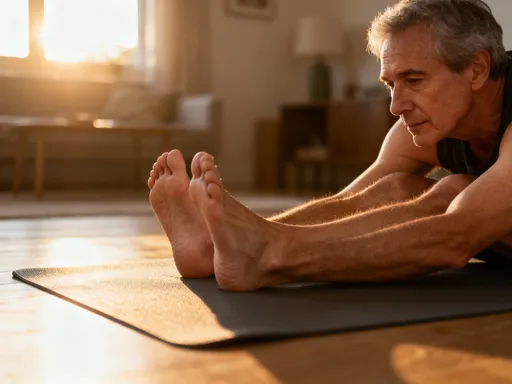
Why I Picked Yoga Meditation for My Comeback — Fast & Natural
After hitting a wall with stress and low energy, I turned to something simple but powerful — yoga meditation rooted in traditional Chinese wellness. It wasn’t about quick fixes or magic cures, but real, steady recovery. What surprised me? How fast small daily practices brought noticeable change. This isn’t medical advice, but my personal journey blending ancient wisdom with modern life. If you're rebuilding your health quietly and naturally, this might resonate — and maybe help — more than you expect.
The Breaking Point That Changed Everything
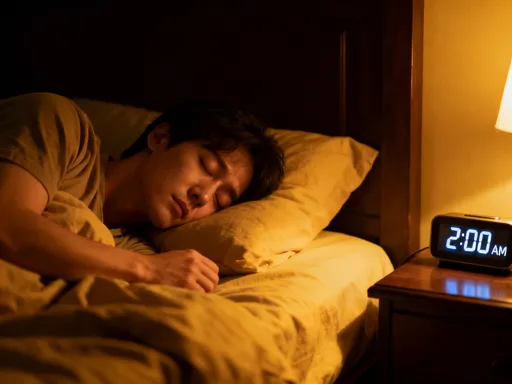
It wasn’t a single event, but a slow unraveling. For months, I had been pushing through fatigue, telling myself it was just a busy season. I was sleeping poorly, waking up with a tight chest and a mind already racing. Simple tasks felt overwhelming. My energy would spike in the morning only to crash by mid-afternoon, leaving me reliant on coffee and sugar to keep going. I stopped enjoying walks with my children, canceled plans with friends, and found myself snapping over minor frustrations. The truth was, I wasn’t just tired — I was depleted.
Doctors ran tests. Blood work came back mostly normal. I was labeled as stressed, perhaps slightly anemic, and advised to rest and eat better. While well-meaning, the guidance felt incomplete. Resting was hard when my mind wouldn’t quiet down. Eating better helped, but didn’t solve the underlying exhaustion. I began to suspect that something deeper was out of balance — not just physically, but emotionally and energetically. I needed a form of rehabilitation that addressed the whole picture, not just isolated symptoms. I wanted something I could start immediately, without waiting for appointments or prescriptions.
That’s when I began researching holistic approaches. I wasn’t looking for miracles, but for tools that were accessible, gentle, and sustainable. I wanted a practice that didn’t require expensive equipment or hours of time. Most importantly, I needed something that could begin to restore my inner rhythm — a way to feel like myself again without force or strain. It was in this search that I encountered the integration of yoga meditation with principles from traditional Chinese medicine, a path that promised not just relief, but renewal from within.
Why Traditional Chinese Medicine (TCM) Made Sense to Me
At first, the concepts of Traditional Chinese Medicine (TCM) seemed foreign — talk of Qi, meridians, and organ systems that didn’t align exactly with Western anatomy. But the more I learned, the more it made sense. TCM doesn’t see the body as a collection of separate parts, but as an interconnected network where physical, emotional, and energetic health are deeply linked. The idea that emotions like worry or anger could affect digestion or sleep wasn’t mystical — it resonated with my own experience.
The central concept of Qi — often translated as vital energy or life force — became a key to understanding my fatigue. In TCM, Qi flows through channels in the body, supporting function and vitality. When Qi is abundant and moving smoothly, we feel alert, resilient, and calm. When it’s blocked, deficient, or stagnant, we experience symptoms like fatigue, irritability, poor digestion, or trouble sleeping. My exhaustion wasn’t just about not sleeping enough; it was a sign of Qi depletion and stagnation, likely from chronic stress and overexertion.
What drew me to TCM was its focus on balance and prevention. Unlike approaches that wait for disease to appear before acting, TCM encourages daily practices to maintain harmony before imbalance becomes illness. This preventive mindset felt empowering. It shifted my view of health from reactive — treating problems as they arise — to proactive — nurturing my system every day. Recovery, in this framework, wasn’t about fixing a broken part, but about restoring the natural flow and rhythm of the body. This perspective made healing feel less like a medical intervention and more like a return to a natural state of well-being.
Additionally, TCM honors the uniqueness of each individual. There’s no one-size-fits-all solution. Instead, patterns are assessed, and recommendations are tailored. This personalized approach gave me hope that I could find a path that truly fit my life and needs. It wasn’t about forcing myself into a rigid system, but about listening to my body and making small, consistent adjustments that supported my specific constitution and current state.
How Yoga Meditation Fits Into a TCM-Based Rehab Plan
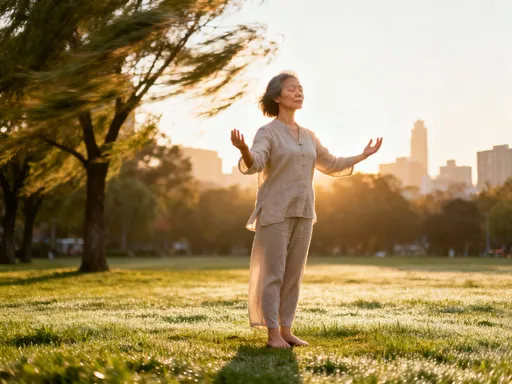
Yoga meditation, in this context, became more than just physical exercise. It emerged as a powerful tool for regulating Qi and calming the Shen — the spirit or mind in TCM terms. While modern yoga is often marketed as a workout, its roots lie in breath, awareness, and energy cultivation, all of which align closely with TCM principles. The combination of gentle movement, mindful breathing, and mental focus creates an internal environment where Qi can move freely and stagnation can begin to dissolve.
Each yoga posture, or asana, is designed to open specific areas of the body, which in TCM correspond to meridian pathways. For example, forward bends gently compress the abdomen, stimulating the digestive organs and helping to regulate Spleen and Stomach Qi, which are often weakened by stress and irregular eating. Twists can help release stagnation in the liver, an organ TCM associates with emotional regulation and the smooth flow of Qi. Even simple poses like Child’s Pose or Legs-Up-the-Wall encourage downward energy flow, calming the nervous system and supporting kidney function, which in TCM is linked to vitality and long-term energy reserves.
Breathwork, or pranayama, plays a crucial role. Slow, deep breathing activates the parasympathetic nervous system, signaling the body to rest and digest. In TCM, this supports the Lung Qi, which governs respiration and also influences the body’s defensive energy, or Wei Qi. By practicing mindful breathing, I wasn’t just oxygenating my cells — I was strengthening my body’s natural resilience and helping to clear mental fog caused by Qi stagnation.
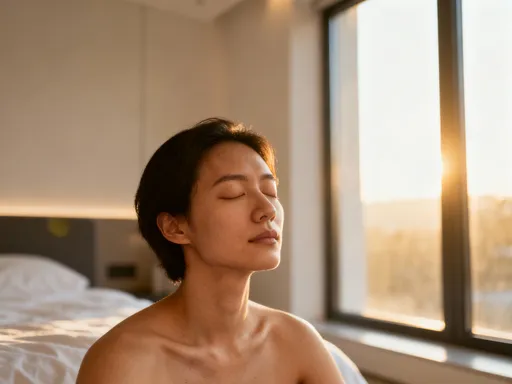
Meditation, the still aspect of the practice, directly addresses the Shen. When the mind is scattered or anxious, the Shen is said to be “restless,” which can disrupt sleep, concentration, and emotional balance. Sitting quietly, focusing on the breath or a simple mantra, helps anchor the Shen and bring it back into harmony. Over time, this practice helped me feel more grounded, less reactive, and more present in my daily life. Yoga meditation, therefore, served as a bridge — a daily ritual that connected movement with stillness, body with mind, and modern life with ancient wisdom.
My First 7 Days: What I Actually Did (Simple & Doable)
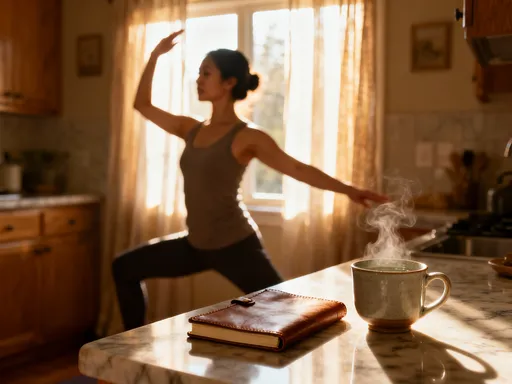
I started small — too small, I thought at first. Ten minutes in the morning, five in the evening. That was my entire commitment. I didn’t invest in a mat or special clothes. I practiced in my living room, in pajamas, before the household woke up. The routine was simple: begin with three minutes of seated breathing, focusing on slow inhales and longer exhales. Then, two rounds of gentle Cat-Cow stretches to wake the spine, followed by a few minutes of standing forward fold and seated twist. I ended with a minute of stillness, hands resting on my lap, eyes closed.
The first few days were awkward. My mind wandered constantly. My hamstrings felt tight. I questioned whether anything was happening. But I kept showing up. I tied the practice to an existing habit — brushing my teeth — so it became part of my morning routine. I didn’t aim for perfection. Some days, I only did five minutes. Others, I forgot entirely. But I made it a rule: no guilt, just return.
By day four, I noticed something subtle — I wasn’t reaching for coffee immediately. I felt a slight lift in energy, not the jolt of caffeine, but a quieter, steadier presence. Sleep improved slightly; I fell asleep faster and woke up feeling less groggy. The mental fog that usually hovered by mid-morning began to lift sooner. These weren’t dramatic changes, but they were real. I started looking forward to those quiet moments, not as another task, but as a gift to myself.
In the evenings, I added a short reflection. I’d sit quietly for five minutes, sometimes journaling one sentence about how I felt. This wasn’t deep therapy — just acknowledgment. “Today was hard, but I stayed calm in the grocery line.” Or, “I felt tired, but I rested instead of pushing.” These small acts of self-awareness helped me tune into my body’s signals, a skill I had long ignored. The entire practice required no special skills, no expense, and fit easily into the margins of my day. That accessibility was key — it removed the barrier of “I don’t have time,” and replaced it with “I can do this.”
Noticeable Shifts: What Changed in 3 Weeks
By the third week, the changes became more tangible. I still had busy days, but my energy levels felt more stable. I wasn’t experiencing the afternoon crashes that used to leave me slumped at my desk. I found myself taking the stairs without thinking, something I had avoided for months. One day, I realized I had walked through a crowded store without feeling overwhelmed — a small victory, but meaningful.
Emotionally, I felt less reactive. I remember a moment when my child spilled juice on the kitchen floor. In the past, I might have snapped, already on edge from fatigue. This time, I took a breath, cleaned it up calmly, and even laughed. It wasn’t that the stress was gone — it was that my capacity to handle it had increased. I wasn’t being swept away by every emotional wave; I had found an inner anchor.
Sleep continued to improve. I was falling asleep within 15–20 minutes instead of lying awake for hours. My sleep felt deeper, more restorative. I woke up less frequently during the night and felt more refreshed in the morning. This wasn’t due to any supplement or medication — just the cumulative effect of daily breathing, gentle movement, and mental quiet.
In TCM terms, these improvements reflected a reduction in Qi stagnation and a gradual rebuilding of Qi and Blood. When energy flows smoothly, the body functions better. The liver, which governs the smooth flow of Qi and is easily disrupted by stress, began to function more efficiently. The Spleen, responsible for transforming food into energy, worked better when not burdened by constant tension. These internal shifts manifested outwardly as clearer thinking, better digestion, and improved mood. The progress wasn’t linear — some days were better than others — but the overall trajectory was upward. I wasn’t “cured,” but I was moving in the right direction, and that made all the difference.
Blending Old Wisdom With Real Life: Making It Stick
The real challenge wasn’t starting — it was continuing. Life got busy. Some days, I was too tired. Others, I felt too impatient, wanting faster results. I missed days. I skipped practices. But I learned to treat consistency like a muscle — the important thing wasn’t perfection, but return. Each time I came back, even after a break, I reinforced the habit.
I found ways to weave the practice into my routine. I paired morning yoga with making my tea — I’d do a few stretches while the water boiled. I used a simple phone reminder labeled “Breathe” that popped up at noon. On hectic days, I practiced for just one minute — a few deep breaths at my desk, or a quick shoulder roll. These micro-practices kept the connection alive, even when I couldn’t do a full session.
I also started journaling briefly, not about goals or achievements, but about how I felt. “Felt anxious this morning — breathing helped.” “Slept well — must keep up the evening quiet time.” This reflection helped me see patterns and appreciate small wins. It also made the practice more personal, less like a chore and more like a conversation with myself.
I accepted that setbacks were part of the process. Healing isn’t a straight line. Some weeks, progress stalled. Other times, old habits resurfaced. But instead of giving up, I adjusted. I shortened the practice, changed the time of day, or focused on just one element — breath, for example. The flexibility kept it sustainable. Over time, what began as a 10-minute experiment became a non-negotiable part of my day, like brushing my teeth or drinking water. It wasn’t about adding more to my plate — it was about creating space to care for myself, quietly and consistently.
Why This Isn’t a Cure-All — And That’s Okay
It’s important to be clear: yoga meditation is not a substitute for medical care. There were times when I needed professional support — for nutritional deficiencies, for hormonal imbalances, for moments when anxiety crossed into clinical territory. I consulted doctors, followed treatment plans, and used this practice as a complement, not a replacement. It supported my recovery, but didn’t erase the need for diagnosis or intervention when necessary.
What yoga meditation offered was a way to participate actively in my healing. It gave me tools to manage stress, improve sleep, and regulate my nervous system — all of which enhanced the effectiveness of other treatments. It empowered me to take daily action, even when I couldn’t control everything. And it taught me patience — that healing isn’t about speed, but about showing up, again and again, with kindness and commitment.
For anyone rebuilding their health, especially after burnout or chronic stress, this approach may offer a gentle yet powerful starting point. It doesn’t demand perfection. It doesn’t require belief in any particular philosophy. It simply asks for a few minutes a day to breathe, move, and be present. The changes may be subtle at first — a little more calm, a little more energy, a little more clarity. But over time, these small shifts accumulate into something profound: a return to balance, a reconnection with oneself, and a quiet, steady comeback that feels both natural and deeply earned.